Kabuli Pulao
200 min · 6 people · Asian Dishes · Afghanistan
Published on 4 November 2026
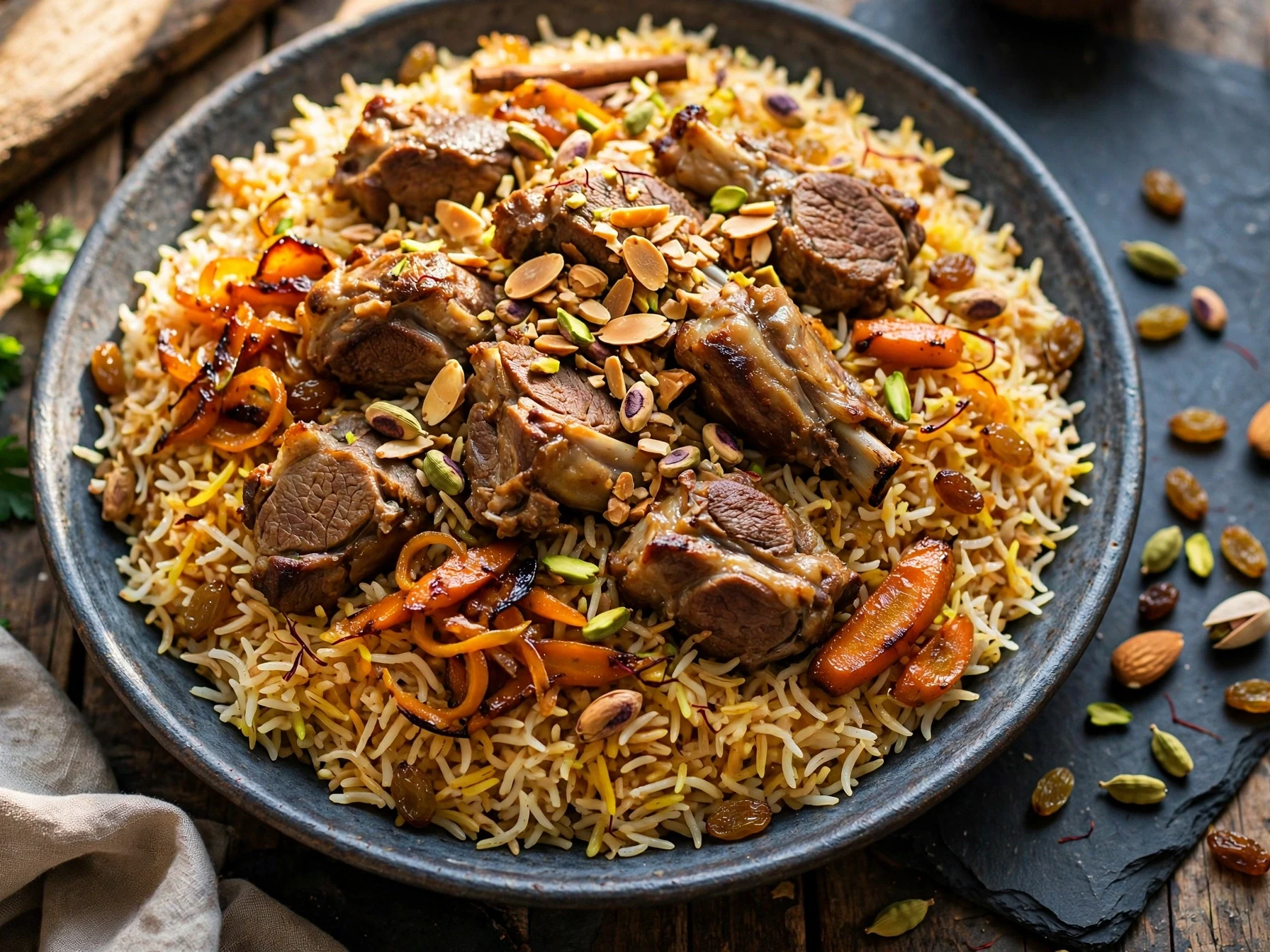
Kabuli Pulao is Afghanistan's national dish — golden basmati rice layered with tender, gently spiced lamb, topped with caramelised carrots and plump raisins, and finished with slivered almonds and pistachios. The rice gets its amber colour from caramelised sugar, not saffron, and the lamb is simmered until tender in its own stock, which then flavours the rice. It is the festive centrepiece of Afghan cooking, served at weddings and family gatherings, eaten from a shared dish, often with a floor spread called a dastarkhan.
Open the interactive recipe — switch language, watch the video, save itRecipe Video
Ingredients
- Basmati rice 1 kg (rinsed)
- soaked in cold water for 2 hours
- Lamb leg or shoulder
- on the bone 800 g
- chopped into 6 cm pieces
- Vegetable oil 200 ml
- Onion 1 (chopped)
- Crushed garlic or garlic paste 1 tbsp
- Salt 2 tbsp
- White sugar 75 g (1/3 cup)
- Garam masala 2 tsp (ground cloves, bay leaves, cardamom and cinnamon)
- Freshly ground cardamom 1.5 tsp
- Carrots 250 g (peeled)
- cut into batons
- Sultanas or dried raisins 75 g
- Mixed slivered almonds
- pistachios 75 g
- to garnish
Nutrition (approx. per serving)
1274 calories · Protein 39.6 g · Fat 49.8 g · Saturated fat 9.6 g · Carbs 162.4 g · Sugar 23.4 g · Fiber 5.4 g · Sodium 2428 mg
Method
- Heat 50 ml of the oil in a large frying pan over medium heat and cook the onion for 6-8 minutes, until golden.
- Add the lamb, garlic and 1 tbsp salt and cook for 8-10 minutes, until the lamb is well browned on all sides. Add water, reduce the heat to low and cook until the lamb is tender, skimming the froth off the surface occasionally. Remove the lamb and set aside; reserve the stock.
- Place half of the sugar in a hot, dry saucepan over medium heat and cook, shaking the pan, for 5-6 minutes until the sugar has caramelised.
- Carefully add 250 ml (1 cup) of reserved stock, salt, 1 tsp garam masala and a pinch of cardamom powder. Bring to the boil, then remove from the heat and set aside.
- Drain the soaked rice and cook in a large saucepan of boiling water for 5 minutes, until only almost cooked. Drain and return to the pan.
- Pour the caramelised sugar mixture over the rice, add a pinch of garam masala, and stir carefully and lightly until the rice is evenly coated and golden.
- Heat 1 tbsp of the oil in a frying pan over medium-high heat. Add the carrot and the remaining sugar and stir for 5 minutes, until lightly caramelised and glossy. Add the sultanas and cook for another 1 minute, then stir in another pinch of cardamom and set aside.
- Heat 1 tbsp oil in a frying pan until smoking and pour over the rice. Make holes through the rice with the end of a large spoon to let the steam through. Top with the spiced carrot and lamb pieces, cover and seal the pan with a tea towel, then a lid. Cook over high heat for 5 minutes, then reduce to low and cook for another 10 minutes. Remove from the heat and leave, covered, for 10 minutes. Serve layered: rice, then lamb, then remaining rice, topped with spiced carrots, almonds and pistachios.
Chef's tip
Do not rush the lamb: simmer it gently until it is truly tender, and keep the stock — it is what flavours the rice. Parboil the rice only until almost cooked; it finishes in the steam, and overcooked rice turns the pulao mushy.
Serving
Serve from a large shared dish: a layer of rice, then the lamb, then the remaining rice, topped with the spiced carrots, raisins, almonds and pistachios. Eat with salad and yoghurt on the side.
Storage and reheating
Refrigerate leftovers in a closed container and eat within 2 days. Reheat gently in a covered pan with a splash of water or stock, on low heat, until steaming. Do not freeze the garnish — keep the carrots, raisins and nuts separate if freezing the rice and lamb.
Ingredient notes
- Soak the rice for the full 2 hours. Long-soaked basmati cooks evenly and stays long and separate instead of breaking.
- Caramelise the sugar carefully: it should turn deep amber, not dark brown. Burnt sugar makes the whole dish bitter.
- Use bone-in lamb. The bones release collagen into the stock and make the rice far richer than boneless meat does.
- Seal the pot well with the tea towel and lid for the final steam. Escaping steam dries the rice out instead of finishing it.
Variations
- Chicken kabuli pulao: replace the lamb with 800 g bone-in chicken pieces and simmer only 30-40 minutes until tender.
- Beef kabuli pulao: replace the lamb with 800 g bone-in beef and simmer until tender, about 2 hours.
- Vegetarian pulao: skip the meat and cook the rice in vegetable stock; double the carrots and raisins and add chickpeas.
Common mistakes
- Cooking the rice fully before layering. Parboiled rice finishes in the steam; fully cooked rice turns mushy.
- Burning the caramelised sugar. Dark brown sugar tastes bitter and colours the rice muddy instead of golden.
- Skipping the soak. Unsoaked basmati cooks unevenly and breaks in the pot.
- Leaving the pot unsealed for the final steam. The rice dries out and the top layer stays hard.
Frequently asked questions
What makes Kabuli Pulao different from biryani?
Kabuli pulao is gently spiced with cardamom and garam masala, gets its golden colour from caramelised sugar rather than saffron, and is topped with sweet caramelised carrots and raisins. Biryani is more heavily spiced, layered with fried onions, and usually coloured with saffron.
Can I use boneless lamb?
Yes, but bone-in lamb is better: the bones flavour the stock that cooks the rice. If you use boneless lamb, simmer it for less time and check often so it does not dry out.
Why is my rice mushy?
The rice was probably cooked too long before layering, or the pot was not sealed for the final steam. Parboil only 5 minutes until almost cooked, and seal the pot with a tea towel and lid so the rice finishes in gentle steam.
Can I make Kabuli Pulao ahead of time?
Yes. Cook the lamb and make the caramelised sugar mixture a day ahead and refrigerate them. On the day, parboil the rice, layer everything and steam. Leftovers keep 2 days in the fridge.
More
More Asian Dishes recipes · More Afghanistan recipes · All recipes · Cooking FAQs · Trending Recipes
Share this recipe: ·