Dolma
120 min · 6 people · World Dishes · Armenia
Published on 4 November 2026
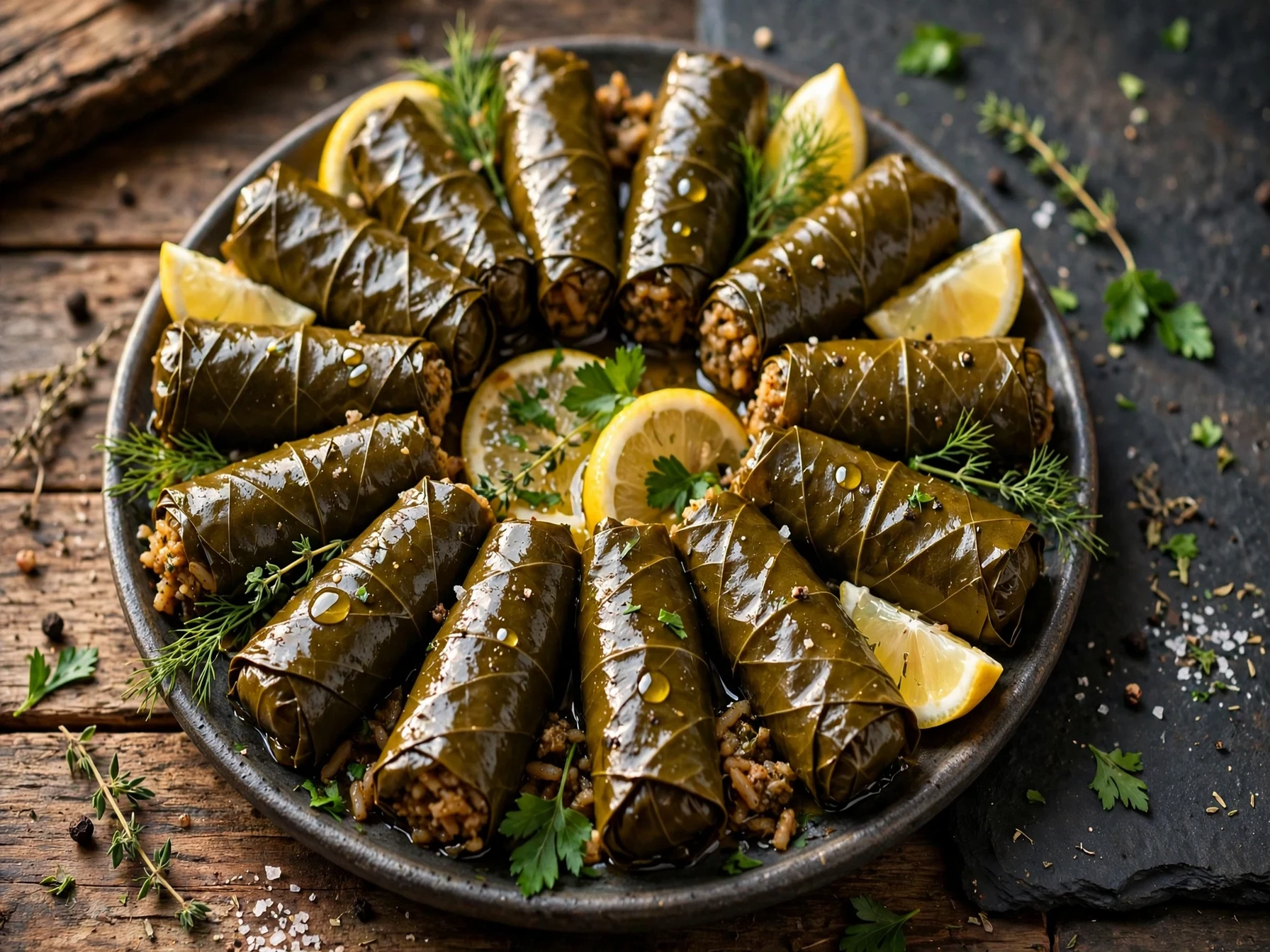
Dolma — called tolma in Armenian — is Armenia's classic stuffed grape leaf dish: tender vine leaves rolled around a filling of spiced minced lamb or beef, long-grain rice, onion, parsley, mint and garlic, seasoned with allspice, cinnamon and cumin, then packed snugly into a pot with lemon slices and simmered gently in broth until the rice is cooked and the leaves are tender. It is the dish of family gatherings, weddings and celebrations across Armenia, made in big batches and served warm with yoghurt or a cucumber and tomato salad. Rolling takes a little practice, but the method is simple: rinse, mix, roll, pack tight, and let a slow simmer do the rest.
Open the interactive recipe — switch language, watch the video, save itRecipe Video
Ingredients
- Grape leaves 30-40 (1 jar, brined) or fresh leaves (blanched)
- Ground lamb or beef 500g (or a mix of both)
- Long-grain rice 1 cup (rinsed)
- Onion 1 large (finely chopped)
- Fresh parsley 1/2 cup (finely chopped)
- Fresh mint 1/4 cup (finely chopped)
- Garlic 3-4 cloves (minced)
- Ground allspice 1 tsp
- Ground cinnamon 1/2 tsp
- Ground black pepper 1/4 tsp
- Ground cumin 1/4 tsp
- Tomato sauce or tomato paste 1/2 cup
- Lemon 1 (thinly sliced)
- Olive oil 2-3 tbsp
- Salt 1 tsp
- or to taste
- Chicken or vegetable broth 3 cups
Nutrition (approx. per serving)
427 calories · Protein 23.1 g · Fat 20.3 g · Saturated fat 6 g · Carbs 40.3 g · Sugar 6.4 g · Fiber 8.1 g · Sodium 958 mg
Method
- Rinse jarred grape leaves thoroughly under cold water to remove excess brine; if using fresh leaves, blanch them in boiling water for 1-2 minutes, then cool in ice water and pat dry.
- In a large bowl combine the minced meat, rinsed rice, chopped onion, parsley, mint, minced garlic, allspice, cinnamon, black pepper, cumin, 1 tbsp olive oil and 1/2 tsp salt, and mix thoroughly by hand until evenly combined.
- Lay a grape leaf flat, vein-side up, trim the stem, and place 1-2 tbsp of filling at the centre near the base of the leaf.
- Fold the bottom edge over the filling, fold in the sides, and roll up tightly into a neat cylinder; repeat for all the leaves and filling.
- Line a large pot with a few damaged grape leaves or lemon slices, then arrange the rolled dolma snugly in layers, placing lemon slices between the layers.
- Mix the tomato sauce or paste with the remaining olive oil, salt and black pepper, and pour it over the dolma; top with more lemon slices.
- Pour in enough broth to cover the dolma, place a heat-proof plate or a few grape leaves on top to hold them down, bring to a boil, then cover and simmer on low for 1 to 1.5 hours until the rice is cooked and the leaves are tender.
- Remove from the heat, rest briefly, and serve warm with yoghurt or a cucumber and tomato salad.
Chef's tip
Pack the rolls in snugly — if they have room to move they unravel while simmering. The plate on top is not optional; it keeps every roll tight and submerged so the rice cooks evenly.
Serving
Serve warm, 5-6 rolls per person, with a spoonful of plain yoghurt or garlic yoghurt, lemon wedges and a cucumber and tomato salad on the side. Dolma is a main course for family meals and celebrations, but it also works as part of a table of small dishes, served at room temperature.
Storage and reheating
Refrigerate leftover dolma in its cooking liquid in a closed container and eat within 3 to 4 days. Reheat gently in a covered pan with a splash of broth or water until warmed through. Dolma also freezes well for up to 3 months; thaw overnight in the fridge and reheat gently.
Ingredient notes
- Rinse jarred grape leaves very well. Brined leaves are salty, and any brine left on them will make the whole pot too salty, even before the added salt.
- Use long-grain rice. Short-grain rice turns soft and gluey inside the roll and can burst the leaves as it swells.
- Do not overfill the leaves. The rice expands as it cooks, and a roll packed too full will split open in the pot.
- Keep the simmer gentle and the plate in place. Hard boiling shakes the rolls loose, while a low, steady simmer cooks the rice evenly and keeps the leaves tender.
Variations
- Meatless (Lenten) dolma: leave out the meat and use 2 cups of rice with extra onion, parsley, mint and a handful of chopped walnuts or cooked chickpeas; serve at room temperature with lemon.
- Cabbage-leaf dolma: replace the grape leaves with blanched cabbage leaves, rolled the same way — a common Armenian winter version when vine leaves are out of season.
- Lamb-only dolma: use 500g minced lamb instead of a mix, add extra mint, and serve with garlic yoghurt (matzoon) and a squeeze of lemon.
Common mistakes
- Skipping the rinse. Jarred leaves straight from the brine make the dolma far too salty, and no amount of yoghurt will fix it.
- Overfilling the leaves. The rice swells as it cooks, so an overfilled roll bursts and spills its filling into the pot.
- Packing the rolls loosely or skipping the plate. Rolls with room to move unravel while simmering; pack them snugly and weigh them down.
- Boiling hard instead of simmering. A rolling boil shakes the rolls apart and toughens the leaves, while the rice inside stays undercooked.
Frequently asked questions
Can I use fresh grape leaves instead of jarred ones?
Yes. Blanch fresh leaves in boiling water for 1-2 minutes until soft and pliable, then cool them in ice water and pat dry before rolling. Pick young, tender leaves about the size of your palm — old, large leaves are tough even after long cooking.
Can I make dolma ahead of time?
Yes, dolma tastes even better the next day, once the flavours have settled. Make it a day ahead, cool it in its cooking liquid, refrigerate in a closed container and eat within 3 to 4 days. Reheat gently with a splash of broth.
Why did my dolma unravel while cooking?
The rolls were probably packed too loosely, rolled too loosely, or cooked without a plate on top. Roll each leaf tightly, pack the rolls snugly in layers with no gaps, weigh them down with a heat-proof plate, and keep the simmer gentle.
Can I freeze dolma?
Yes. Cool the cooked dolma completely, pack it in a closed container with a little of its cooking liquid, and freeze for up to 3 months. Thaw overnight in the fridge and reheat gently in a covered pan with a splash of broth or water.
More
More World Dishes recipes · More Armenia recipes · All recipes · Cooking FAQs · Trending Recipes
Share this recipe: ·