Chicken Korma
60 min · 4 people · Desi Dishes · Pakistan
Published on 1 November 2026
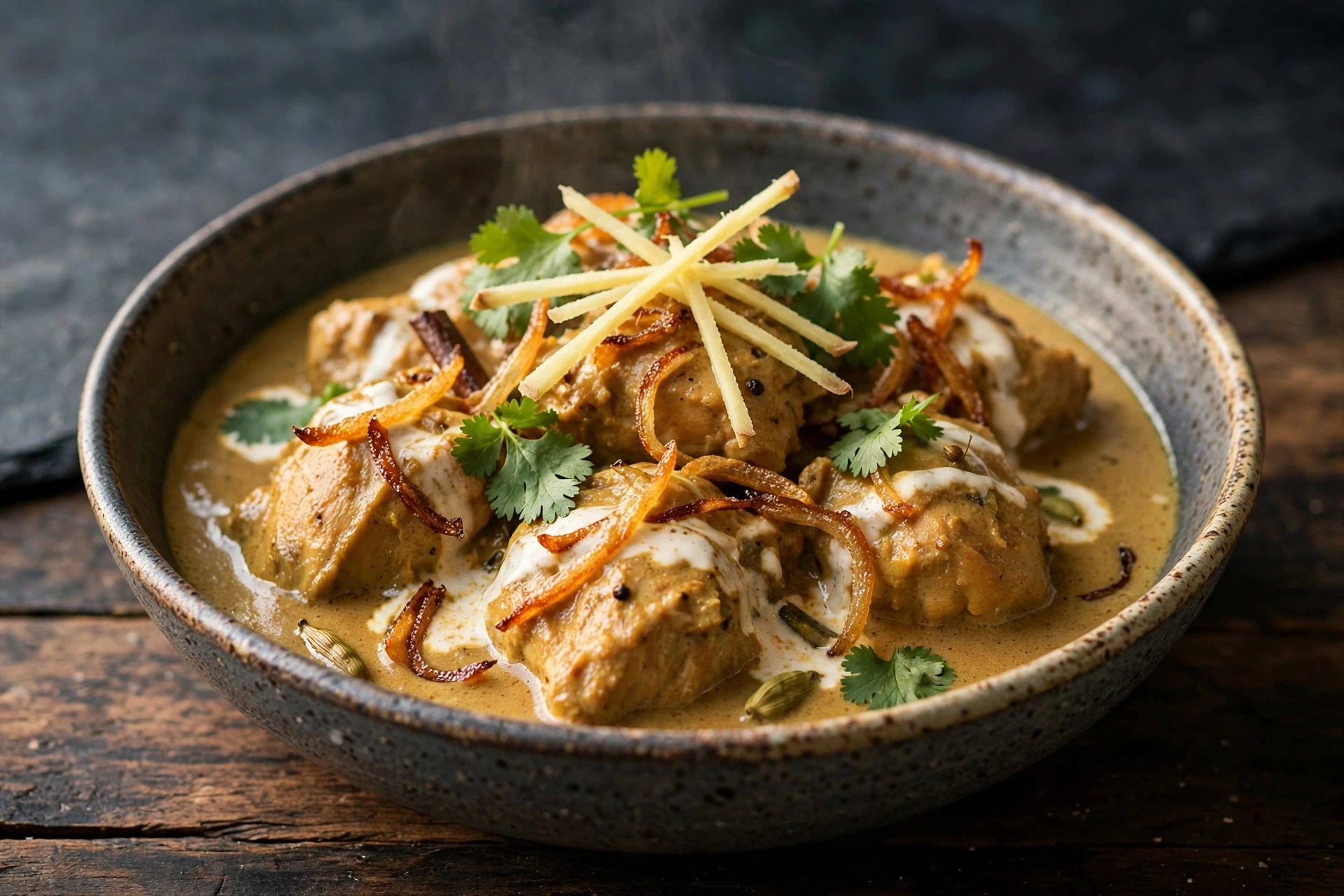
Chicken korma is the great celebration curry of Pakistan, the dish that appears at weddings, Eid dinners and dawaats, served with sheermal or hot naan. It comes from the Mughal courts, where meat was marinated in yoghurt with spices and then simmered gently until tender. The heart of a real korma is simple: bone-in chicken, crisp fried onions, full-fat yoghurt and a warm blend of whole spices — no tomatoes, no cream. The onions are fried until deep golden brown and blended with yoghurt into a smooth paste, which gives the gravy its famous reddish-brown colour and silky body. It is mild, rich and fragrant, finished with kewra water and ginger, and it tastes even better the next day.
Open the interactive recipe — switch language, watch the video, save itVideo coming soon, this recipe is being filmed, so check back soon to watch every step.
Ingredients
- Chicken 1 kg
- bone-in
- skinless
- cut into 8 to 10 pieces
- Onions 3 medium (thinly sliced)
- Yoghurt 1 cup
- full-fat
- whisked (½ cup for the marinade, ½ cup for the onion paste)
- Ginger-garlic paste 3 tsp (1 tbsp)
- Coriander powder 3 tsp (1 tbsp)
- red chilli powder 1 tsp
- turmeric powder ½ tsp
- salt 1½ tsp
- Oil or ghee ½ cup
- Bay leaves 3
- green cardamom 6
- black cardamom 2
- cloves 7
- cinnamon sticks 2
- Cumin seeds 1½ tsp
- nutmeg ¼ piece
- mace 2 blades
- star anise ½
- Kewra water 1 tsp
- Fresh ginger 1-inch piece
- julienned (for garnish)
- Sliced almonds ½ tbsp (for garnish (optional))
- Water 2 cups
Nutrition (approx. per serving)
602 calories · Protein 42.8 g · Fat 39.3 g · Saturated fat 19.9 g · Carbs 17.5 g · Sugar 8 g · Fiber 3.4 g · Sodium 1042 mg
Method
- Grind the green cardamom, black cardamom, cloves, cinnamon, cumin seeds, nutmeg, mace and star anise into a fine powder. Mix the chicken with the ground spices and ½ cup of yoghurt, cover and marinate for 30 minutes.
- Heat the oil or ghee in a large heavy pot over medium-high heat and fry the sliced onions, stirring often, until deep golden brown and crisp, about 15 minutes. Lift them out with a slotted spoon, drain and cool.
- Blend the cooled fried onions with the remaining ½ cup of yoghurt until completely smooth.
- In the same oil, add the bay leaves and fry for 30 seconds until fragrant, then add the ginger-garlic paste and fry for 1 to 2 minutes.
- Add the marinated chicken with the coriander powder, red chilli powder, turmeric and salt, and fry on high heat for 4 minutes until the chicken changes colour.
- Pour in 1 cup of water, bring to a boil, then cover and cook on low to medium heat for 25 to 30 minutes, until the chicken is tender.
- Stir in the fried-onion and yoghurt paste with the remaining 1 cup of water and cook on high heat for 4 to 5 minutes, until the gravy turns reddish-brown and the oil rises to the surface.
- Stir in the kewra water and half the julienned ginger, simmer for 2 to 3 minutes, then rest for 5 minutes. Serve hot, garnished with the remaining ginger and sliced almonds, with naan or roti.
Chef's tip
Whisk the yoghurt until completely smooth and add it on low heat, stirring constantly. Cold or lumpy yoghurt added to a very hot pot is the main reason korma splits and turns grainy.
Serving
Serve hot in a wide serving bowl, with the gravy spooned over the chicken, garnished with julienned ginger and sliced almonds. Korma is traditionally served with hot tandoori naan, sheermal or taftan, or with roti or plain basmati rice. Put a bowl of raita and a kachumber salad on the table alongside.
Storage and reheating
Cool and refrigerate in an airtight container for up to 3 days. Reheat gently in a saucepan on low heat, stirring often, with a splash of water if the gravy has thickened. Freeze for up to 3 months, thaw overnight in the fridge, and add the ginger and almond garnish fresh at serving only.
Ingredient notes
- Bone-in, skinless chicken gives the richest gravy. The bones add flavour while the meat stays juicy in the yoghurt braise.
- Use full-fat yoghurt only. Low-fat yoghurt is thin, splits easily and never gives the creamy korma gravy.
- An authentic korma has no tomatoes and no cream. The colour comes from the fried onions and red chilli powder, and the richness from yoghurt and ghee.
- Fry the onions in plenty of oil until deep golden brown, not pale and not burnt. Pale onions make a pale, sweet gravy; burnt onions make it bitter.
Variations
- Badami korma: soak 20 almonds and 10 cashews, grind them to a smooth paste and stir it in with the onion-yoghurt paste for a richer, nuttier gravy.
- Mutton korma: use 1 kg bone-in mutton or goat meat instead of chicken and cook covered for 1 to 1.5 hours, adding extra water as needed, until tender.
- Aloo korma: add 2 large potatoes, cut into 8 pieces each, and fry them for 3 to 5 minutes after the whole spices, before adding the chicken.
Common mistakes
- Adding cold or unwhisked yoghurt to a very hot pot. It splits into grainy curds and never comes back together.
- Frying the onions too pale or too dark. Pale onions give a pale, sweet gravy; burnt onions turn the whole korma bitter.
- Skipping the marinade. Thirty minutes in yoghurt and spices tenderises the chicken and builds the flavour.
- Adding too much water or serving it straight away. Keep the gravy thick enough to coat the chicken, and rest the korma for 5 minutes so the oil rises and the flavours settle.
Frequently asked questions
Can I freeze Chicken Korma?
Yes. Let it cool completely, pack it into airtight containers and freeze for up to 3 months. Thaw overnight in the fridge and reheat gently on low heat, stirring often.
Why did my yoghurt split in the korma?
Yoghurt splits when it is added cold, lumpy or to a very hot pot. Always whisk it until smooth, take the pot off the heat or turn it to low, and stir constantly as you add it.
Can I use boneless chicken for korma?
Yes. Boneless thighs work best and stay juicy. Reduce the covered cooking time to about 20 minutes, since boneless chicken cooks faster than bone-in pieces.
Can I use shop-bought fried onions?
Yes. Crisp fried onions (barista) from a Pakistani or Indian grocery work well. Use 1 to 1¼ cups, and make sure they are not dusted with cornflour.
More
More Desi Dishes recipes · More Pakistan recipes · All recipes · Cooking FAQs · Trending Recipes
Share this recipe: ·